

A Kestrel For A Knave by Barry Hines & Kes, Directed by Ken Loach – Review & Synopsis
I have chosen to write this article for a collection of reasons. Firstly, I originate from Barnsley in South Yorkshire, where the novel and film are based. In addition to this, not only do I have an unshakable bond with my origins, but both the film Kes and the novel A Kestrel For A Knave evoke a deep sense of personal sentimentality. Both the novel and film are among this genre that ignited my deep love of social realism over 40 years ago.
I have friends, relatives (and late relatives) who were friends with some of the cast. Some of my relatives attended the old St Helen’s School in Carlton where the filming took place. I have family who lived in that particular area at the time. Much of the filming takes place in areas I am well acquainted with, especially the former Cudworth Hotel (or The Dards as it was known in the village of Cudworth where I grew up).
Filming took place during 1968 and 1969 (the year I was born). On November 14th 1969, the first screening of Kes in the UK took place at the London Film Festival. The film’s then general UK release was on March 27th 1970. I was seven months old. So I can accept that maybe it may appear that I am a little biased due to originating from Barnsley for these reasons. However, above all this, the novel and film are a testament to the message it delivers. This is clearly evident by the longevity of praise that A Kestrel for a Knave and Kes have to this day. Now fifty-six years later.
Synopsis: A Kestrel for a Knave by Barry Hines (1968)
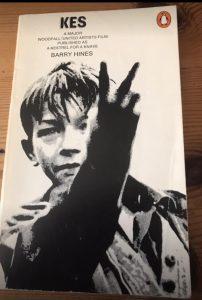
A Kestrel for a Knave is a novel written by Barry Hines and was published in 1968. The story follows the young protagonist, Billy Casper. Billy is a young boy who has a very harsh and difficult life both at home and at school. He is from a poor working-class family that is dysfunctional. He suffers from neglect in his home life and is bullied by his elder brother, Jud. Billy is equally struggling at school. Because of this, his teachers take little interest in him or his well-being (Hines, 1978).
Billy’s bleak reality is aggravated more due to the repressive, selfish, and stiff upper lip attitude within that community. A community that many times appears indifferent and misunderstands Billy. They show little care for the adversities he is experiencing, whilst he is doing his best to navigate through this. Billy is marginalized by those who surround him and, in many respects, he is socially excluded. Cruelly, this adds to Billy’s lack of self-belonging and lack of confidence (Hines, 1978).
However, one day that begins to change on a walk through the countryside. It’s here that Billy discovers the nest of a Kestrel containing chicks.
Billy takes one of the chicks home, and he calls it Kes. He goes on to form a bond with Kes. Thus giving Billy a sense of friendship, solace, and an escape from his everyday life. Billy’s relationship with Kes helps him reclaim his self-respect, confidence, and dignity. Kes provides Billy with a source of escapism from those who do not understand him or are cruel to him. Sadly, due to his brutal living environment, Billy’s happiness is short-lived. Thus resulting in a heart-breaking and sad conclusion (Hines, 1978).
Still Angry After All These Years
Barry Hines discusses the backdrop to the writing of his novel A Kestrel for a Knave. Interviewed by journalist Clare Jenkins of Pennine Productions.
Michael Helme
Jun 27, 2019
Kes Directed by Ken Loach & Produced By Tony Garnett
A Kestrel for a Knave was later adapted and released as the film Kes in 1970. It was directed by the acclaimed social realism director Ken Loach and produced by Tony Garnett. The cast includes David Bradley, Brian Glover, Freddie Fletcher, Lynne Perrie and Colin Welland. All of whose performances in Kes are outstanding in their authenticity. To this day, it still remains one of the greatest social realist British films of all time (Loach, 1969; Hayward, 2005).
Ken Loach – On Casting Billy In Kes & Low Budget Filmmaking
QUAD Participate
Nov 23, 2011
Interview – Ken Loach (Kes, 1970)
La Semaine de la Critique
Apr 15, 2013
Review: A Kestrel For A Knave
A Kestrel for a Knave by Barry Hines is renowned for the truthfulness with which it depicts working-class life in Yorkshire in the 1960s. It illustrates the resilience that the human spirit portrays when dealing with harsh and cruel adversity. The novel A Kestrel for a Knave explores the subjects of the struggle of the working class in its relation to poverty, family dysfunction, and social inequality.
Billy’s Family – “A Tall Story”
The book gives the reader an indication of the background of Billy’s immediate family dynamics. Not only is his brother a bully, but his mother seems to have little interest in him, and he is estranged from his father. The book, however, does touch upon Billy’s past relationship with his father. One of the telling aspects in gaining a better understanding of Billy’s estrangement from his father is when his teacher, Mr Farthing, encourages Billy to talk about Kes in class. The students are then asked to write their version of a “tall story”. Billy’s very brief story is about his family life and imagining his father is still living in the family home (Hines, 1978).
Also, just before the book concludes, Billy reflects upon his relationship with his father. This is when Billy is visiting a local abandoned cinema and reflects on earlier times spent here just before the splitting up of his parents. Billy misses his Dad, who he appears to have had a bond with. And even more so is evident why Kes is so important to Billy. This left me with a feeling of deep sympathy towards Billy, as he in essence has been abandoned by those who should be looking after him the most (Hines, 1978).
Billy’s Education
A Kestrel for a Knave also explores the limits and challenges that the working class face as they navigate through the education system. An example within the book, along with other indicators, is when Billy writes his “tall story”. His poor spelling and grammar, for his age, indicates the failings of his education. This in itself tells a story about Billy’s educational background. One which I found so very poignant.
The book highlights the limited opportunities available to disadvantaged children to advance in their education due to their socio-economic backgrounds, which often concluding in their feelings of hopelessness as well as diminishing their confidence. and self-esteem. This is symbolic of younger generations facing similar circumstances as those of Billy’s. This can and does, in effect, limit their financial and personal social growth in their later life. It identifies how this can also lead to social isolation.
A Kestrel for a Knave, however, gives hope to those experiencing a similar situation to Billy. That being said, not all is lost. There is the potential for personal fulfilment and self-improvement regardless of socio-economic background and in the worst of situations. This is recognisable in the relationship between Billy and Kes (Hines, 1978).
Review: Kes
The film Kes was released in the UK in March 1970 (IMDb), making this a British cinema classic. The authentic acting of David Bradley as the young Billy Casper adds to the critical acclaim of the film, as his acting is not only outstanding but totally compelling.
Kes (1969) Original Trailer
HD Retro Trailers
Dec 18, 2017
Ken Loach‘s unique style of directing Kes equally adds to the appeal of the film (Hayward, 2005).
The scenery and backdrop, captured within the film is totally authentic and representative of the book. Also, the Yorkshire and Barnsley dialect of the actors in Kes adds even more to the film’s authenticity and veracity (Scovell, 2018).
The cast, many not originally professional actors at the time of appearing in Kes , adds to making this film so believable and relatable to those who have watched the film. Hence why Kes is such a truly unforgettable film.
A Personal Perspective
From my personal perspective, A Kestrel For A Knave has to be one of the most powerful reads and films depicting social realism that I have read and watched. It is totally authentic in its portrayal and narrative. Not to mention that the novel is both extremely poignant and deeply moving.
The author, Barry Hines, originated from Barnsley, where the filming of Kes took place. Barry Hines has to be wholly applauded for his truthful portrayal of life in a working-class mining town in South Yorkshire. Additionally, for pointing out the social inequality bestowed upon Billy within the book. Also for equally highlighting the challenges and limitations that working-class children face during their journey throughout the education system.
I say this with strong conviction and firsthand experience of this observation. The once mining town I too originate from, Barnsley, is the place where my roots are set. And also a place I feel honoured to have originated from. As well as being a community I was part of. Although it now thirty six odd years ago when I left to get my degree. However, regardless of the lapse of years, on my returning visits, it will continue to bring me peace, comfort, and a deep sense of belonging. Ones which I have never, and doubt ever will, feel no matter where I roam. I have never, nor ever will, relinquish my working-class roots; they will always contribute to being the person who I became.
Equality of Education for Children of all Backgrounds
I will always have a great feeling of nostalgic sentimentality for this book and film. However, even more so for what A Kestrel For A Knave and Kes portrays and highlights. I have observed and seen the casualties of those kids written off due to their backgrounds. Just like poor “Billy Casper”. Regardless of socio-economic background, every child deserves an equal chance and a good start to their education. A child’s education should be strongly supported and encouraged. It influences their feeling of self-worth, confidence, feeling of purpose, as well as determining their early adult future and beyond. It is something I feel very strongly about for many reasons.
Conclusion
Irrespective of whether one admires social realism or not, A Kestrel for a Knave by Barry Hines and the film Kes are both a novel and a film analysing the hierarchical class system and its impact on educational failure. Both are timeless for anyone to read and view at some point in their life. Due to the captivating story of the novel and the directing, casting, and performances of the film, their statuses are elevated within English Literature and British cinematic history.
In conclusion, A Kestrel for a Knave and the film adaptation of Kes poignantly and eloquently depict the determined search for a young boy’s identity when virtually everything in life appears to be stacked against him.
References
Hayward, A. (2005) Which Side are You On? Ken Loach and His Films. London: Bloomsbury
Hines, B. (1978) A Kestrel for a Knave. London: Penguin Books.
Loach, K. (dir.) (1969) Kes [Film]
Scovell, A. (2018) Kes: in search of the locations for Ken Loach’s classic. British Film Institute (BFI). Available at: https://www.bfi.org.uk/features/search-locations-kes-ken-loach (Accessed: 6th November 2025).
This article is dedicated to my Mam and Dad, Linda and Don.
If you liked this article and would like to follow my feeds, I can be found on Facebook, Bluesky and Twitter.


© 2025 – 2026, Jayne Thomas. All rights reserved.
Follow me :