
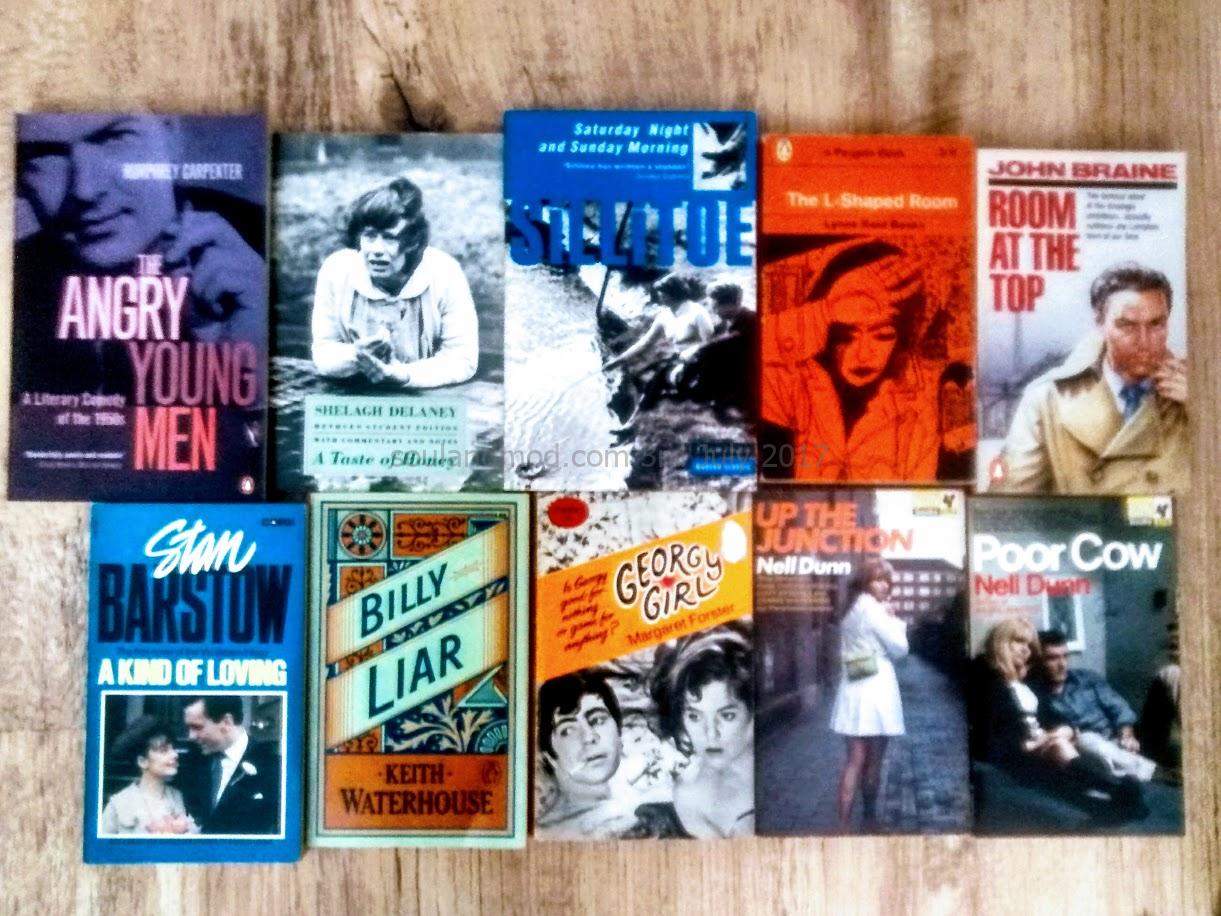
Whilst still at school, I discovered a genre of literature that would become a lifelong passion. My first encounter came in May 1982, when Stan Barstow’s A Kind of Loving was broadcast on television. I was thirteen at the time, and the story of Vic Brown stayed with me. I went on to read Barstow’s Vic Brown trilogy and began collecting his books.
The following year, my interest was further ignited by my English Literature teacher, Guy Thompson, who introduced our class to the work of Keith Waterhouse and other Kitchen Sink writers. It was through Guy’s encouragement that my fascination developed beyond one author and into a lifelong love of Kitchen Sink Realism.
For over four decades, it has been a labour of love to source many of these now out-of-print Social Realism and Kitchen Sink Realism books. The first book I read was Stan Barstow’s A Kind of Loving, at the age of 14. By October 1985, my interest was further ignited when the novel-to-film adaptation of John Braine’s Room at the Top was broadcast on television.
My Kitchen Sink Realism Beginnings … How It All Began
My journey with Kitchen Sink Realism reading began in Spring 1983. It is what I term one of my lifelong love affairs. It began with A Kind of Loving by Stan Barstow, followed by the wonderful novel There Is a Happy Land by Keith Waterhouse.
A Kind of Loving by Stan Barstow

A Kind of Loving – Trailer
Rialto Pictures
Mar 29, 2017
My introduction to Kitchen Sink literature came through my then English Literature teacher, Guy Thompson. Guy was an encouraging teacher and one of life’s encouragers, and was the catalyst for my love of Kitchen Sink Realism. He introduced my class, Alpha One, to some of the Kitchen Sink literature, which led me to read Billy Liar by Keith Waterhouse too.
Billy Liar by Keith Waterhouse

Billy Liar, the hilariously funny story (on the surface) of Billy Fisher. Based in the fictional town of Stradhoughton in Yorkshire. Billy, who lives in his own fantasy world of Ambrosia, with dreams of moving to London to become a writer. The film never fails to make me laugh. I have watched Billy Liar numerous times throughout those forty years and still, to this day, have an overwhelming fondness for it.
Billy Liar Official Trailer
Dec 23, 2014
palacecinemas
The Appeal of Kitchen Sink Realism Books
What’s the appeal of my obsession with Kitchen Sink Realism books and drama? If I am to be totally honest, this probably stems from where I grew up. I grew up in a predominantly working-class area of South Yorkshire. Some of these books, which later became film adaptations, are set in Yorkshire and Lancashire. Many of these localities I know well or am at least familiar with. Because of this, these books give me a sense of nostalgia every time I visit them.
This was also closely connected to my fascination with many aspects of the 1960s, which began when I first discovered this literature and continues to this day. I was, after all, a Mod girl in the 1980s.

I feel the Mod subculture draws parallels with some of the characters we encounter within this literature. There is a shared desire to adapt, evolve, and refuse to conform to what society may portray as the norm, while expressing themselves in a way that feels true to who they are.
The books aren’t important to me merely because they’re Northern, nostalgic, or connected to the 1960s/Mod culture. It is because I feel a deep level of empathy towards the characters.
Social Factors
Many of these novels and plays explore the social situations faced by working-class people in post-war Britain, regardless of their location or setting.
Each story has its own distinctive character, while combining the grit and rawness of everyday life with important social issues such as class distinction, extramarital affairs, race relations and alcoholism, alongside homelessness, homosexuality, abortion and unwanted pregnancy.
I feel I almost know many of these characters personally. Some I cannot help but admire, purely because of how they deal with their individual circumstances, ranging from social pressure and poverty to sacrificing long-term happiness in the pursuit of financial stability and success.
What I find especially compelling about these books is how their characters adapt to and deal with social hardship. Most importantly, they demonstrate strength of character and a determination to battle on, despite whatever life continues to throw at them.
Writers Associated with Kitchen Sink Realism and Social Realism
Whilst not exhaustive, the following writers and playwrights are associated with Kitchen Sink Realism, Social Realism and the wider “Angry Young Men” movement.
Male authors and playwrights:
- Kingsley Amis
- Stan Barstow
- John Braine
- ER Braithwaite
- Barry Hines
- Bill Naughton
- John Osborne
- Alan Sillitoe
- David Storey
- John Wain
- Keith Waterhouse
- Arnold Wesker
- Colin Wilson
Women writers:
- Shelagh Delaney
- Margaret Drabble
- Nell Dunn
- Margaret Forster
- Gillian Freeman
- Penelope Mortimer
- Lynne Reid Banks
Celebrating Kitchen Sink Drama & Social Realism
It was two years ago that I chose to expand my personal journey through Kitchen Sink Realism by creating a dedicated section of Soul & Mod: Kitchen Sink Drama & Social Realism. Here I explore the origins of the literature, the writers and playwrights associated with it, the films and television adaptations, and my own chronological journey through the books I have collected and loved for more than four decades.
My aim is not to “re-invent the wheel”, but to share a life journey that has become very much part of who I am today, while celebrating a fascinating and important period of British cultural history. Whether you’re discovering Kitchen Sink Realism for the first time or already know the literature well, I hope you’ll enjoy exploring the collection.
© 2017 – 2026, Jayne Thomas. All rights reserved.
Follow me :