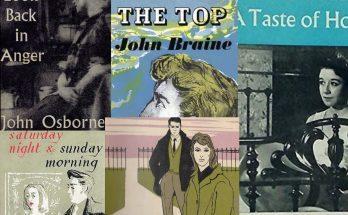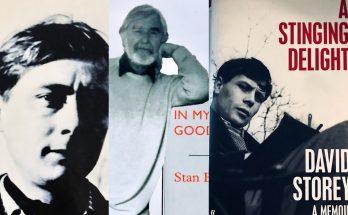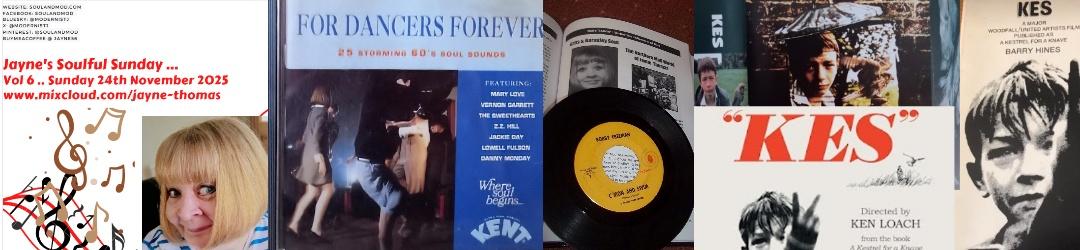

Poor Cow By Nell Dunn (1967)
“Poor Cow” was written by Nell Dunn and published in 1967. It portrays working-class life in the late 1960s, through the central character and protagonist, 22-year old Joy. The novel, “Poor Cow” highlights the themes of poverty and class struggle. It also outlines the fortitude of female strength as well as abusive and toxic relationships.
Synopsis of Poor Cow by Nell Dunn
Joy is a young married mother and is married to Tom. They have one child together, Johnny. Unfortunately for Joy, Tom is not only abusive but also carries out a robbery and is sent to prison. Left holding the baby, Johnny, so to speak, Joy moves into a single room with her Aunt Emm. It’s apparent that like all human beings, Joy wants stability. She dreams of having a place of her own and a car, one day.
When Joy’s husband is jailed she befriends her husband’s friend Dave who is a more understanding and caring man. Dave offers Joy the stability she is deserving of and they begin an affair and eventually get a flat together. Unfortunately life knocks Joy back down again, when Dave gets a twelve year stretch for robbery. Joy has no choice but to move back in with her Aunt Emm.
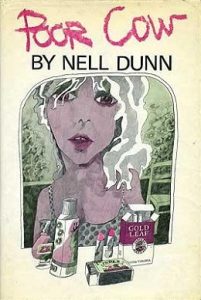
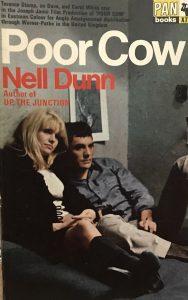
First edition of Poor Cow by Nell Dunn (1967). Published by MacGibbon & Kee. Cover design by John Farman.
Joy’s Survival Mode
Once again Joy finds herself in the predicament of instability. Finding herself maneuvering through the harsh reality of poverty and transient relationships, knowing also that she has to financially support herself and Johnny. Joy then takes a job as a barmaid and a nude model. Here she finds herself entering the periphery of the world of both prostitution and promiscuity.
Eventually Tom is released from prison, still displaying his unpredictable moods and his abusive and violent temperament. Further to her son disappearing, Joy is given a wake-up call to take stock of and evaluate her turbulent life and decides that her family comes first. Whilst reflecting on her past she decides to give her marriage another try.
Poor Cow Directed by Ken Loach (1967)
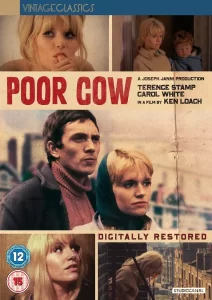
“Poor Cow” was adapted into the film also in 1967. It was directed by Ken Loach and and produced by Joseph Janni and Edward Joseph. It stars Terence Stamp as the charming Dave, Carol White as the main character Joy, John Bindon stars as Joy’s husband Tom and Queenie Watts as her Aunt Emm. With a mellow soundtrack from popular music artists from the 1960s including Donovan, The Rolling Stones, The Lovin’ Spoonful and Dave Berry, adds further to the sense of feeling portrayed in the film.
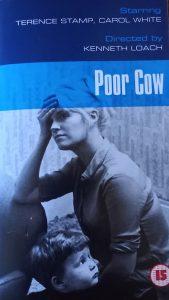
The above video was distributed by Warner Bros in 1994. I have since replaced all my kitchen sink realism collection of films on DVD. However have kept the sleeves from my VHS tapes mainly for nostalgic reasons. “Poor Cow” especially as this was the first film my parents went to see at the once Barnsley Odeon on their first date in December 1967.
Nell Dunn Broadcast
For those who enjoy podcast or radio listening, here is a wonderful and interesting broadcast from BBC Radio 4 from June 2016. Here British radio and television presenter and novelist Francine Stock chats with Nell Dunn about the writing of “Poor Cow” for Ken Loach‘s film adaptation.
Poor Cow – Interview with Ken Loach
June 14th, 2020
StudiocanalUK
Trailer – Poor Cow (1967) – @britishfilmsandtv
Evandrus
23 Apr 2024
Escaping The Cycle Of Poverty
“Poor Cow” highlights the cruel reality of the limited opportunities and choices due to the socio-economic background of the working-classes, as illustrated by Joy. Sadly resulting in the bleak existence faced by those who live in poverty stricken, urban working-class areas trying to break out of the poverty trap.
Financial hardship places strain on family relationships which is evident in “Poor Cow”. Additionally it is unmistakeable upon reading the novel and viewing the film of the social inequality bestowed upon the working-classes in comparison to the more affluent of those within society.
Societal Expectations Of Women In The 1960s
“Poor Cow“, gives the reader an insight into the life of Joy and how her role (like many women back then) is influenced by her relationships and motherhood. It highlights the obstacles that women were faced with whilst seeking self discovery and independence. Evident within both film and novel is that Joy is strong willed and has a sense of humour that enables her to navigate through these obstacles. An example of this is within the novel is when she attends her driving test, totally unprepared. Which I found humorous when re-reading.
The Strive Towards Independence And Sexual Freedom
Not only does “Poor Cow” portray Joy’s striving for independence, it also shows her pursuit of sexual freedom. Thus Joy comes across as being feministic in her approach. Which at that particular time in the sixties would have been frowned upon by the majority of society. This is characterised in the novel and film by the several transient relationships she has with men, after Tom and Dave are sent to prison.
Joy and Motherhood
The novel depicts Joy’s unwavering devotion, love and sacrificing for her son Jonny, by the lengths that she will go to in order to provide for him.
It’s A Man’s World
Noticeable within both film and novel are the emphasis of Joy’s romantic relationships with a back drop of living in a difficult environment. Taking into account this was in an era when sexism was more prominent in society. Additionally that some working-class women suffering abuse from their partners was not openly talked about. This not only highlights how attitudes have changed but the silent suffering that abused women face.
I found myself spontaneously thinking to myself, whilst reading “Poor Cow ” “Joy, just get shut. You are better than this, for God’s sake stop selling yourself short with these men!“ I will admit I did have the occasional eye roll moments at Joy’s behaviour but then I was brought back to reality. “Poor Cow” may be fictional, however I lost myself in the story, to the extents that it may as well have been factual. The novel immersed me.
Just as it did when I read my copy way back in 1987. However I’m not Joy and I have to remember that the novel was written and published two years before I was born. Times have changed, or at least I would like to think so, regarding the equality of women in general.
Tom And Dave
Joy is searching for stability and emotional connection, although her choice of both Tom and Dave as romantic partners are the ones most women would shy away from. Both petty criminals, Tom is a misogynist not to mention violent. Whilst Dave is a sensitive soul, he cannot provide the stability which Joy craves. Both men due to their criminal backgrounds can offer only temporary stability at the very most.
Joy’s relationships with men are a roller coaster ride interspersed with abuse and fleeting temporary bouts of happiness. It’s an emotional roller coaster ride that anyone in their right mind would be happy to run a mile from. But then again with life experience comes knowledge as we know and to be fair to Joy she is young . “Poor Cow” gives an insight to the reader of how challenging it can be to form stable relationships as well as establish authentic emotional connections whilst living in an environment of lower socio-economic backgrounds.
Review of Poor Cow – The Novel & Film
“Poor Cow” is an engaging, sympathetic and a heart-felt read. The novel gives the reader an insight of the oppression faced by working-class women in the 1960s. Thus revealing the impact on those women that were trapped in relationships with abusive and misogynistic partners.
The film “Poor Cow”, directed by Ken Loach is filmed in documentary style. In this film, Carol White visually brings to life, the character of Joy from the novel. Her acting in the film is outstanding as she portrays Joy with such ease. Her performance is natural. The filming comprises of a series of vignettes, which adds further to the social realism and grittiness of the film. Whilst at the same time the film, displays compassion and empathy.
To Conclude
Joy may be a poor cow, however she is a warm and likeable character. Both novel and film are seminal and notable works within the literary and cinematic spheres of social realism of the 1960s.
What I have and will always continue to admire about Nell Dunn‘s writing in “Up The Junction”, “Poor Cow” and more recently “The Muse” and equally that of Ken Loach‘s directing, is that they display empathy towards all their characters. But not only this, they bring the characters to life in such a way that they are so relatable. The characters are almost someone you once knew or know. There are “no airs and graces” with these characters. They are totally down to earth, which is why I find them so relatable. To conclude, “Poor Cow” is honest, transparent and authentically depicts social realism at some of it’s best, concluding in both a highly recommended read and watch.
Dedicated to my parents, Linda and Don who went on their first date to see “Poor Cow” on it’s release in the UK, 58 years ago, back in December 1967.
© 2025, Jayne Thomas. All rights reserved.
Follow me :