Social Realism: Male Novelists, Screenwriters and Playwrights of Post-war Britain
Post-war British literature and cinema captured a society at the heart of major social and cultural transformation. This article highlights 13 Social Realism male novelists, screenwriters and playwrights whose work reflected different aspects of this changing Britain. By exploring working-class life, identity, education, class and social mobility, this resulted in the creation of gritty Kitchen Sink Realism and expanded literary and philosophical perspectives. Through their writing contributions, they offer a unique window into the people, places and experiences that helped shape modern British literature, theatre and film (Ratcliffe, 2009; Hill, 1986; Lay, 2002).
📚 Sid Chaplin (1916–1986)
Sid Chaplin was an English novelist and short-story writer whose working life in the Durham coalfield deeply influenced his writing. Born into a mining family in Shildon, County Durham, he drew on his experiences to portray working-class communities in North-East England. His work explored labour, community, identity, and the changes reshaping industrial life. His fiction integrated close social observation with warmth and a strong sense of regional identity. This can be observed particularly in The Day of the Sardine (1961) and The Watchers and the Watched (1962). (Newcastle University, n.d.; National Coal Mining Museum, 2022).
Selected works
The Leaping Lad (1946) — short stories.
The Thin Seam (1950) — novel.
The Day of the Sardine (1961) — novel.
The Watchers and the Watched (1962) — novel.
Sam in the Morning (1965) — novel.
(Newcastle University, n.d.)
🎥 Discover More: A World of My Own — Sid Chaplin — Newfield, County Durham
Explore Sid Chaplin‘s connection with County Durham through A World of My Own. This video offers a way to discover the writer beyond his books, placing his work in the context of the region and communities that influenced his outlook and writing.
Sep 23, 2024
📚 Bill Naughton (1910–1992)
Bill Naughton was an Irish-born British novelist, playwright and screenwriter who grew up in Bolton, Lancashire. His experiences of working-class life and industrial communities provided much of the inspiration for his writing. Best known for Alfie, he explored relationships, masculinity, family life and social change in Britain by using a blend of humour and unsentimental observation. His plays and stories represented the changing attitudes and everyday experiences of working-class communities in post-war Britain (Bloomsbury Publishing, n.d.).
Selected works
A Roof over Your Head (1945) — autobiographical writing about working-class life.
Late Night on Watling Street (1959) — short stories.
The Goalkeeper’s Revenge and Other Stories (1961) — short stories.
Alfie (1963) —stage play, subsequently adapted into the 1966 film starring Michael Caine. Naughton’s novel followed in 1966.
All in Good Time (1963) — play, adapted for the film The Family Way (1966).
Spring and Port Wine (1967) — play, later adapted into the 1970 film of the same name.
📺 Discover More: Bill Naughton — Video Biography
Discover more about Bill Naughton through this video biography, which explores the life and career of the writer best known for Alfie. It offers a starting point for learning about the man behind the plays, novels and short stories that captured working-class life with humour and honesty.
Paul Blackburn
Dec 5, 2017
📚 E. R. Braithwaite (1912–2016)
E. R. Braithwaite was a Guyanese-born British novelist, teacher and diplomat. His writing explored race, class and social opportunity in post-war Britain. His writing explored race, class and social opportunity in post-war Britain, drawing on his experiences as a teacher in an East London school. He is best known for To Sir, With Love (1959). The autobiographical novel offered a personal perspective on the challenges facing both working-class pupils and a Black teacher encountering racial prejudice. His work remains an important contribution to the social history of education, race and everyday life in post-war Britain (David Higham Associates, n.d.; Braithwaite, 1959).
Selected works
To Sir, With Love (1959) — an autobiographical novel based on his teaching experiences.
Paid Servant (1962) — autobiographical account drawing on his work in London’s child-welfare services.
Choice of Straws (1965) — a novel exploring racism and social tensions in post-war London.
Reluctant Neighbours (1972) — explores racial prejudice and encounters across racial and cultural divides.
(David Higham Associates, n.d.; Braithwaite, 1959)
🎥 Discover More: Meet E. R. Braithwaite
Discover more about E. R. Braithwaite, the author of To Sir, With Love, and the notable life behind his best-known work. This video offers readers a way to explore the man whose experiences brought questions of race, education and social opportunity into the public eye, adding a personal take to his contribution to post-war British literature.
Jan 8, 2014
📚 Kingsley Amis (1922–1995)
Kingsley Amis was a leading British novelist, poet and critic, widely recognised for Lucky Jim (1954), a satirical novel that became closely associated with the Angry Young Men movement. His early fiction combined satire, humour, social observation and criticism of class attitudes, academic life and the British establishment. Alongside his longstanding literary career, Kingsley Amis became one of the most eminent British writers of his generation (Leader, 2004; Ratcliffe, 2009).
Selected works
Lucky Jim (1954)
That Uncertain Feeling (1955)
Discover more: Memoirs by Kingsley Amis (1991)
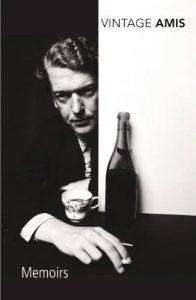
In his autobiography, Kingsley Amis reflects on his life, his relationships with fellow writers, including Philip Larkin and his literary career. The book offers a personal take on the experiences and friendships that influenced one of Britain’s best-known post-war novelists (Amis, 1991).
📚 John Braine (1922–1986)
John Braine was an English novelist best known for Room at the Top (1957), a landmark of post-war British fiction and the Angry Young Men movement, exploring class ambition and social mobility. His early novels explored working-class ambition, social mobility, class divisions and the moral compromises involved in pursuing a better life. Braine’s work captures the evolving social mobility of post-war Britain through characters caught between their working-class roots and personal ambitions. His work contributed to a generation of social realism fiction focusing on the changes in class structures (Amis, 2004; Ratcliffe, 2009).
Selected works
The Vodi (1959)
The Jealous God (1964)
(Braine, 1957; Braine, 1959; Braine, 1962; Braine, 1964)
🎥 Discover more: Firing Line with William F. Buckley Jr.: The Road Back (1970)
Hoover Institution Library & Archives
This is a televised discussion featuring John Braine and Kingsley Amis, exploring their own political views and changing attitudes towards the political Left.
📚 John Wain (1925–1994)
John Wain was an English novelist, poet and literary critic. He was associated with a group of writers who emerged in post-war Britain, known as the “The Movement”. His debut novel was Hurry on Down (1953). It follows a university graduate, Charles Lumley, who rejects conventional expectations and has difficulty finding his place in society. Wain explored the uncertainties faced by a generation questioning long-term traditional values through themes of education, independence, identity and social conformity.
Through his fiction, Wain explored the uncertainties faced by a generation questioning traditional values, particularly through themes of education, independence, identity and social conformity (University of Reading, n.d.; Ratcliffe, 2009).
Notable Novels
Hurry on Down (1953)
The Contenders (1958)
A Travelling Woman (1959)
(Wain, 1953; Wain, 1958; Wain, 1959).
🎥 Discover More: John Wain: Author and Poet — A Centenary Celebration
Discover more about John Wain, the novelist, poet and critic whose writing explored identity, independence and the changing values of post-war Britain. This hundredth anniversary celebration offers an opportunity to explore John Wain‘s life and literary contribution.
Presented by the Staffordshire Film Archive, this video provides another way to learn more about Wain’s life, work and literary legacy.
Mar 3, 2025
📚 Alan Sillitoe (1928–2010)
Alan Sillitoe was an important voice in post-war British literature. Born into a working-class family in Nottingham in 1928, his upbringing and his experiences of the city, including the suburb of Radford and surrounding areas, were inspirations for his writing. He is best known for Saturday Night and Sunday Morning (1958), which offered a portrayal of working-class life, rebellion and individual freedom.
His work often examined the clash between individual ambitions, societal pressures, and the limitations of daily life, giving it an authentic voice to working-class life. His short stories, particularly The Loneliness of the Long-Distance Runner (1959), further established his reputation as a distinctive writer of social realism (Taylor, 2014; Ratcliffe, 2009).
Selected works
Saturday Night and Sunday Morning (1958)
The Loneliness of the Long-Distance Runner (1959)
The Ragman’s Daughter (1963)
Guzman Go Home (1968)
(Sillitoe, 1958; Sillitoe, 1959; Sillitoe, 1963; Sillitoe, 1968).
📖 Discover More: Life Without Armour: An Autobiography by Alan Sillitoe (1995)
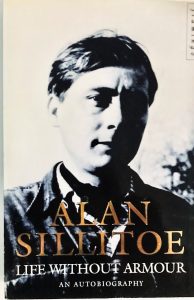
In his autobiography, Alan Sillitoe reflects on his Nottingham upbringing, working-class roots and the experiences that helped influence his life and writing. Life Without Armour: An Autobiography offers a personal insight into the writer behind Saturday Night and Sunday Morning. It equally offers a valuable opportunity to explore the background and influences of one of post-war Britain’s most recognisable social realist writers (Sillitoe, 1995).
📚 Stan Barstow (1928–2011)
Stan Barstow gained recognition with his debut novel, A Kind of Loving (1960), which established him as an important voice in post-war British social realism. His novels and short stories offer realistic portrayals of relationships and working-class life in Northern England. Through ordinary lives, personal struggles and the constraints of post-war society, Barstow explored the social changes of his time with clarity, restraint and a deep and compassionate understanding of his characters (The Guardian, 2011; Barstow, 2001).
Selected works
The Vic Brown Trilogy
This trilogy follows Vic Brown through different stages of his life, exploring relationships, family responsibilities and working-class experience in post-war Northern England.
A Kind of Loving (1960)
The Watchers on the Shore (1966)
The Right True End (1976)
(Barstow, 1960; Barstow, 1966; Barstow, 1976).
Other Key Social Realist Novels
Ask Me Tomorrow (1962)
Joby (1964)
A Raging Calm (1968)
The Ella Palmer Trilogy (1986–1991)
This later trilogy focuses on Ella Palmer’s life within a Yorkshire mining family, exploring family relationships and working-class life through a woman’s experiences.
Just You Wait and See (1986)
Give Us This Day (1989)
Next of Kin (1991)
(Barstow, 1986; Barstow, 1989; Barstow, 1991).
Short Stories and Anthologies
The Desperadoes and Other Stories (1961)
A Season with Eros (1971)
The Glad Eye and Other Stories (1986)
The Likes of Us: Stories of Five Decades (2013)
(Barstow, 1961; Barstow, 1971; Barstow, 1986; Barstow, 2013).
Adaptations and Scripts
Stan Barstow’s work reached audiences beyond his novels and short stories, with adaptations for film, television and radio.
Film adaptations
A Kind of Loving (1962), directed by John Schlesinger and starring Alan Bates and June Ritchie.
Television and radio
Barstow also wrote for television and radio, including work associated with Z-Cars and a television adaptation of A Kind of Loving in 1982.
📖 Discover More: In My Own Good Time by Stan Barstow (2001)

In his autobiography, In My Own Good Time, Stan Barstow offers readers a detailed personal insight into the life and experiences of the writer best known for A Kind of Loving. This is an opportunity to discover more about the writer himself, his background and the experiences that influenced his writing. For anyone wishing to explore Barstow’s work further, it provides a noteworthy avenue into the life of one of post-war Britain’s distinctive social realist writers (Barstow, 2001).
📚🎬 Keith Waterhouse (1929–2009)
Keith Waterhouse was an English novelist, playwright and journalist. He is best known for his novel Billy Liar (1959). Set in a northern English town, the story follows Billy Fisher, whose elaborate daydreams and vivid imagination provide an escape from the disappointments and limitations of everyday life Waterhouse combined comedy with social observation, exploring identity, ambition and the difference between dreams and reality in post-war Britain. His frequent creative collaborator, Willis Hall, worked alongside him on stage and screen adaptations, as well as other projects (Garrick Club, n.d.; Hachette UK, n.d.).
Notable Works Connected to Social Realism and Kitchen Sink Cinema
There Is a Happy Land (1957) — set in a working-class northern neighbourhood, this novel portrays childhood and community life
Billy Liar (1959) — a novel exploring youthful aspirations, fantasising and disappointment with everyday life. Billy Liar was adapted for the stage in 1960 and the screen in 1963.
A Kind of Loving (1962 film) — Waterhouse co-wrote the screenplay with Willis Hall, adapting Stan Barstow‘s 1960 novel for the screen.
Billy Liar on the Moon (1975) — the sequel continuing the story of Billy Fisher.
(Waterhouse, 1959; Waterhouse and Hall, 1960; British Film Institute, 1963).
📖 Discover More: Waterhouse on Newspaper Style — Keith Waterhouse (1989)
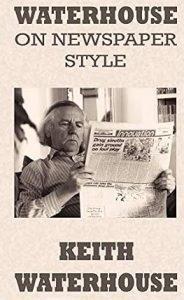
Well known for his novels, plays and the well-liked Billy Liar, Keith Waterhouse also enjoyed a renowned career as a journalist and columnist. In Waterhouse on Newspaper Style, he focuses his attention on the skill of newspaper writing. This offers readers an insight into his professional life and his relationship with writing from a journalist’s perspective. It gives the reader an opportunity to discover and explore a different side of one of post-war Britain’s unique and accomplished writers.
📚🎬 Willis Hall (1929–2005)
Willis Hall was an English playwright, screenwriter and radio and television writer. His working-class roots in Leeds shaped much of his writing. He is particularly renowned for co-writing Billy Liar with his lifelong friend and collaborator Keith Waterhouse, adapting Waterhouse’s novel for the stage in 1960 and subsequently co-writing the screenplay for the 1963 film starring Tom Courtenay. Hall’s work often combined wit and humour with observations of everyday British life, social class and changing attitudes in post-war Britain (Waterhouse, 2009; National Portrait Gallery, n.d.).
Selected Works
Billy Liar (1960) — stage play, co-written with Keith Waterhouse; adapted into the 1963 film.
Celebration (1961) — play, co-written with Keith Waterhouse.
A Kind of Loving (1962) — film screenplay, co-written with Keith Waterhouse, adapted from Stan Barstow’s novel.
(Hall and Waterhouse, 1960; Hall and Waterhouse, 1961; Waterhouse and Hall, 1962).
🎥 Discover More: Billy Liar — Retrospective: Bradford, Yorkshire
Featuring Keith Waterhouse and Willis Hall, this footage offers further insight into the writers behind Billy Liar and their connection to Bradford, Yorkshire. It provides an opportunity to explore the story beyond the novel, stage play and film, while discovering more about the two writers whose collaboration helped bring this much-loved work to life.
Jan 10, 2010
📚 Colin Wilson (1931–2013)
Colin Wilson gained widespread recognition with his first book, The Outsider (1956). It is a philosophical and literary study of alienation and individuals who feel detached from conventional society. It draws on the lives and works of writers, artists and thinkers, in which Wilson explored questions of meaning, individuality, creativity, and the human search for fulfilment. Although the press associated him with the Angry Young Men phenomenon of the 1950s, Wilson’s philosophical approach deviated from the social realism of many writers linked to the era.
Notable Works Connected to the Angry Young Men Era
The Outsider (1956) — a philosophical and literary study of alienation and individuality.
Religion and the Rebel (1957) — a continuation of Wilson’s philosophical exploration of the human search for meaning.
Adrift in Soho (1961) — portraying the bohemian world of 1950s London, this is a semi-autobiographical novel.
The Angry Years: The Rise and Fall of the Angry Young Men (2007) — Wilson’s introspective account of the literary and cultural phenomenon with which he became associated
(Wilson, 1956; Wilson, 1957; Ratcliffe, 2009).
🎥 Discover More: MONITOR – Angry Young Men, including Colin Wilson
Explore Colin Wilson’s place in the Angry Young Men phenomenon through this MONITOR video. The footage offers a starting point for discovering more about Wilson and the wider literary and cultural climate of the 1950s, when writers challenged established ideas, as a consequence attracting considerable public attention.
Apr 2, 2022
📚 David Storey (1933–2017)
David Storey was an English novelist, screenwriter and playwright. He was born into a mining family in Wakefield, West Yorkshire. His writing explored working-class life, class divisions, masculinity and emotional isolation. He used his background and experiences to represent the tensions between individual ambition and social circumstances. His novel This Sporting Life (1960) solidified his reputation and was later adapted in 1963 into the renowned film directed by Lindsay Anderson. Storey also became a key contributor to British theatre, his plays focusing on human relationships and the complexities of everyday life (Saunders, 2021; Booker Prizes, n.d.).
Notable Novels
This Sporting Life (1960)
Flight into Camden (1960)
Radcliffe (1963)
Pasmore (1972)
Saville (1976)
Selected Plays
The Contractor (1969)
Home (1970)
The Changing Room (1971)
(Storey, 1969; Storey, 1970; Storey, 1971).
📖 Discover More: A Stinging Delight: A Memoir by David Storey
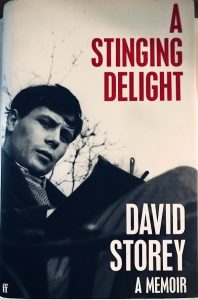
In A Stinging Delight, David Storey reflects on his life and experiences, offering readers a more personal viewpoint on the writer behind the novels and plays. The memoir invites readers to delve into the experiences and influences that accompanied his literary career. For anyone familiar with Storey’s portrayals of working-class life and human relationships, it uncovers the author’s own story (Storey, 2021).
📚 Barry Hines (1939–2016)
Barry Hines was an English novelist, playwright and screenwriter. His writing explored working-class life in South Yorkshire. His most famous novel, A Kestrel for a Knave (1968), assessed the experiences of a young working-class boy, Billy Casper, navigating the constraints of the education system as well as the social inequalities of his environment. Hines brought genuine empathy and grit to his portraits of working-class youth, capturing both their dreams and their struggles. The novel, A Kestrel for a Knave (1968), further added to his recognition when it was adapted into the film Kes, directed by Ken Loach, for which Hines co-wrote the screenplay. Through his novels, television dramas and screenwriting, Hines gave a unique voice to working-class communities and individuals often overlooked in British literature and film (Forrest, 2020; Sheffield Archives, n.d.).
Notable Novels
The Blinder (1966)
First Signs (1972)
The Gamekeeper (1975)
The Price of Coal (1979)
Looks and Smiles (1981)
Unfinished Business (1983)
The Heart of It (1994)
Elvis Over England (1998)
(Hines, 1968; Hines, 1975; Hines, 1977; Forrest, 2020).
Television Drama and Screenwriting
The Price of Coal (1977) — a two-part television drama observing life in a Yorkshire mining community. The book publication followed in 1979.
Kes (1969) — film adaptation of A Kestrel for a Knave, directed by Ken Loach. Hines co-wrote the screenplay.
The Gamekeeper (1980) — film adaptation of Hines’s 1975 novel, directed by Ken Loach.
Looks and Smiles (1981) — based on Hines’s screenplay, directed by Ken Loach.
Short Stories and Non-Fiction
This Artistic Life (2009) — a collection of short stories reflecting Hines’s observations of everyday life and his experiences as a writer.
🎥 Discover More: Barry Hines Interview — A Kestrel for a Knave, Kes — The English Programme (1979)
Discover Barry Hines in his own words in this 1979 interview from The English Programme. Here he discusses his writing and the work for which he became best known. Hines offers readers an opportunity to explore the thinking behind A Kestrel for a Knave and its film adaptation, Kes (Hines, 1979).
Apr 10, 2020
Conclusion
Together, these writers offer a varied portrait of post-war Britain, capturing the everyday struggles, aspirations and experiences of individuals and communities navigating a changing society. Through their novels, short stories, plays and screenplays, they delve deeply into working-class life, social mobility, identity, and education. Their contributions continue to provide an important insight into the social and cultural history of post-war Britain, leaving a lasting legacy in British literature, theatre and cinema.
References
Books and academic studies
-
Carpenter, H. (2003) The Angry Young Men: A Literary Comedy of the 1950s. London: Penguin Books.
-
Hill, J. (1986) Sex, Class and Realism: British Cinema 1956–1963. London: British Film Institute.
-
Lay, S. (2002) British Social Realism: From Documentary to Brit Grit. London: Wallflower Press.
Biographical and historical references
-
Amis, K. (2004) ‘Braine, John Gerard (1922–1986), writer’, Oxford Dictionary of National Biography. Oxford University Press.
-
Forrest, D. (2020) ‘Hines, (Melvin) Barry (1939–2016), author and screenwriter’, Oxford Dictionary of National Biography. Oxford University Press.
-
Leader, Z. (2004) ‘Amis, Sir Kingsley William (1922–1995), writer’, Oxford Dictionary of National Biography. Oxford University Press.
-
Ratcliffe, M. (2000? No – use 2009) ‘Angry young men: (act. 1956–1958)’, Oxford Dictionary of National Biography. Oxford University Press.
-
Saunders, G.J. (2021) ‘Storey [née Story], David Malcolm (1933–2017), novelist, playwright and screenwriter’, Oxford Dictionary of National Biography. Oxford University Press.
-
Taylor, D.J. (2014) ‘Sillitoe, Alan (1928–2010), novelist and short story writer’, Oxford Dictionary of National Biography. Oxford University Press.
Institutional, literary and archival sources
- Bloomsbury Publishing (n.d.) ‘Bill Naughton: author biography’. Bloomsbury – Bill Naughton. (Accessed: 31st October 2026).
- Booker Prizes (n.d.) ‘David Storey: author biography‘. The Booker Prizes – David Storey. (Accessed: 31st October 2026).
-
David Higham Associates (n.d.) ‘E. R. Braithwaite: author biography’. David Higham Associates – E. R. Braithwaite. (Accessed: 31st October 2026).
-
Garrick Club (n.d.) ‘Keith Waterhouse: biographical profile’. Garrick Club – Keith Waterhouse. (Accessed: 31st October 2026).
-
Hachette UK (n.d.) ‘Keith Waterhouse: author biography’. Hachette – Keith Waterhouse. (Accessed: 31st October 2026).
-
National Coal Mining Museum (2022) ‘Voices in the Coalshed: Sidney Chaplin’, 28 April. National Coal Mining Museum. (Accessed: 31st October 2026).
-
National Portrait Gallery (n.d.) ‘Willis Hall: biographical profile’. National Portrait Gallery – Willis Hall. (Accessed: 31st October 2026).
-
Newcastle University (n.d.) ‘Michael Chaplin on the Chaplin (Sid) Archive’. Newcastle University – Sid Chaplin Archive. (Accessed: 31st October 2026).
-
Sheffield Archives (n.d.) ‘Barry Hines: biographical information and archive catalogue’. University of Sheffield – Barry Hines Papers. (Accessed: 31st October 2026).
-
University of Reading (n.d.) ‘John Wain Collection‘. University of Reading Special Collections. (Accessed: 31st October 2026).
-
Wilson, C. (n.d.) ‘About Colin Wilson’. Colin Wilson Online – Biography. (Accessed: 31st October 2026).
Additional film and cultural references
-
British Film Institute (2016) ‘Where to begin with kitchen sink drama’, 22 June. BFI – Kitchen Sink Drama. (Accessed: 31st October 2026).
-
British Film Institute (n.d.) ‘Billy Liar (1963)’. BFI – Billy Liar.(Accessed: 31st October 2026).
-
The Guardian (2011) ‘Stan Barstow obituary’, 1 August. The Guardian – Stan Barstow obituary. (Accessed: 31st October 2026).
© 2026, Jayne Thomas. All rights reserved.
Follow me :