

Kitchen Sink Realism Books & Film Tie-Ins – From Page to Screen – Part One
The kitchen sink films of the late 1950s and 1960s did not emerge in isolation. Many had their roots in the novels, plays and short stories of writers who gave voice to a changing Britain (Hill, 1986; BFI, n.d.).
This series explores the connections between literature, theatre and cinema, examining the original works alongside the films they inspired. Here is the first instalment of the collection: Kitchen Sink Realism Books & Film Tie-Ins – From Page to Screen.
1. 📖 Lucky Jim by Kingsley Amis (1954)
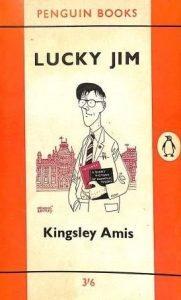
Lucky Jim (1954) by Kingsley Amis follows Jim Dixon, a young university lecturer who becomes increasingly frustrated with social hypocrisy, academic pretension and the expectations of university life. Through a series of comic mishaps and acts of rebellion, Jim struggles to maintain his integrity while seeking a more fulfilling future.
The novel explores themes of anti-elitism, social mobility, class tension, conformity and the absurdities of academic life. Jim’s resistance to hypocrisy and established authority reflects some of the concerns associated with the wider “Angry Young Men ” movement (Amis, 1954; Hill, 1986).
🎬 Lucky Jim Directed by John Boulting (1957)
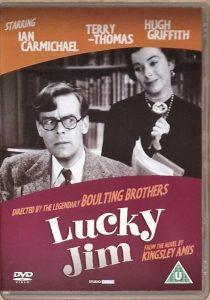
The film adaptation, directed principally by John Boulting, was released in September 1957. It starred Ian Carmichael as Jim Dixon, Terry-Thomas as Bertrand Welch and Hugh Griffith as Professor Welch. The film brought Amis’s satirical portrayal of academic life to the screen, retaining much of the novel’s comic treatment of social pretension and institutional conformity (BFI, n.d.).
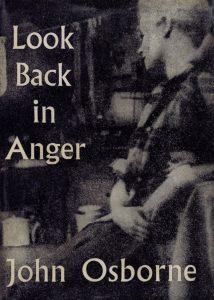
2. 🎭 Look Back in Anger by John Osborne (1956)
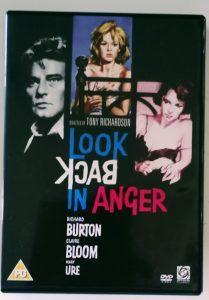
🎬Look Back in Anger Directed by Tony Richardson (1959)
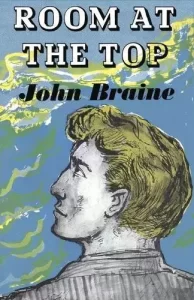
3. 📖 Room at the Top by John Braine (1957)
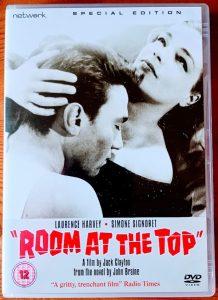
The film adaptation, directed by Jack Clayton, was released in the UK in January 1959. It starred Laurence Harvey as Joe Lampton, Heather Sears as Susan Brown and Simone Signoret as Alice Aisgill. Signoret went on to win the Academy Award for Best Actress, while the film received several further Oscar nominations, including Best Picture, Best Actor and Best Director. The film became one of the defining works of British New Wave cinema (Rialto Pictures, n.d.; Academy of Motion Picture Arts and Sciences, n.d.).
4. 🎭 The Entertainer by John Osborne (1957)
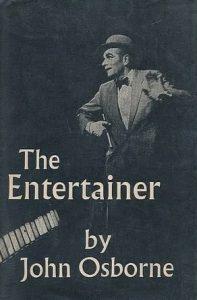
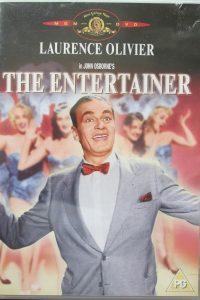
🎬 The Entertainer Directed by Tony Richardson (1960)
5. 🎭 A Taste of Honey by Shelagh Delaney (1958)
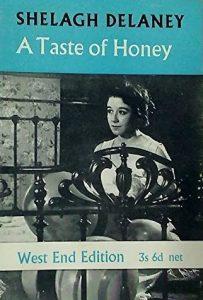
🎬A Taste of Honey Directed by Tony Richardson (1961)
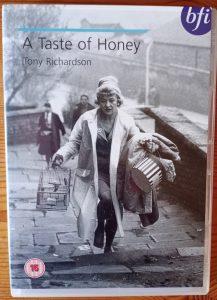
6. 📖 Saturday Night and Sunday Morning by Alan Sillitoe (1958)
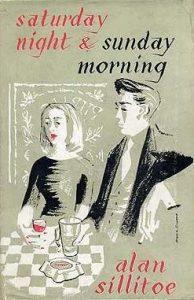
🎬 Saturday Night and Sunday Morning Directed by Karel Reisz (1960)

Directed by Karel Reisz and released in 1960, the film became one of the defining works of British New Wave and Kitchen Sink cinema. It starred Albert Finney as Arthur Seaton, Shirley Anne Field as Doreen and Rachel Roberts as Brenda. The film went on to win the BAFTA Award for Best British Film (BFI, n.d.; BAFTA, n.d.).
7. 📖 Whistle Down the Wind by Mary Hayley Bell (1958)
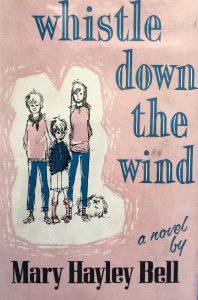
Whistle Down the Wind tells the story of three young siblings growing up in rural Lancashire. When they discover a fugitive hiding in their family’s barn, they mistakenly believe him to be Jesus Christ. Determined to protect him, the children maintain their innocent belief despite the growing search for the escaped prisoner. Their unwavering faith and loyalty bring them into conflict with the adult world, exposing the differences between childhood innocence and adult experience (Bell, 1958).
🎬 Whistle Down the Wind Directed by Bryan Forbes (1961)
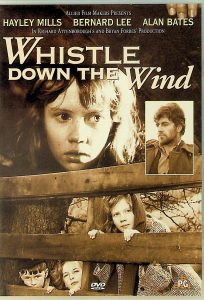
The novel was adapted into a film in 1961, directed by Bryan Forbes and starring Hayley Mills as Kathy and Alan Bates as the fugitive. Filmed in rural Lancashire, the story explores childhood innocence, faith, trust and compassion against the harsher realities of the adult world (BFI, n.d.; BAFTA, n.d.).
8. 📖 Billy Liar by Keith Waterhouse (1959)
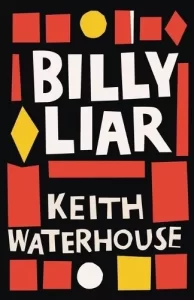
The novel follows Billy Fisher, a working-class young man living in the fictional Yorkshire town of Stadhoughton. Billy uses fantasy and compulsive lying to escape the monotony of his work, family life and the responsibilities of adulthood. However, as his imagined world increasingly conflicts with reality, he finds himself struggling to make decisions about his future. The novel explores generational tensions, working-class aspirations, personal responsibility and the desire to escape the limitations of everyday life (Waterhouse, 1959).
On a personal note, I first read Billy Liar over forty years ago and have revisited the novel several times since. It’s an excellent read and, as my late Nan used to say, “better than any bottle of medicine”.
🎬 Billy Liar Directed by John Schlesinger (1963)
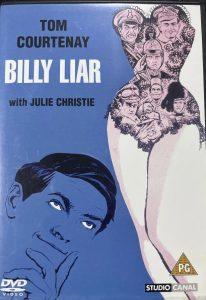
Billy Liar was adapted for the cinema in 1963, directed by John Schlesinger and starring Tom Courtenay as Billy Fisher, Julie Christie as Liz and Wilfred Pickles as Geoffrey Fisher. The film received several BAFTA nominations, with Courtenay and Christie both recognised for their performances (BFI, n.d.; BAFTA, n.d.).
9. 📖 The Loneliness of the Long-Distance Runner & Other Short Stories by Alan Sillitoe (1959)
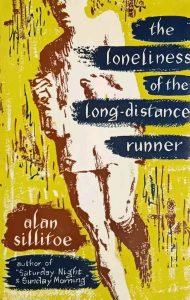
The Loneliness of the Long-Distance Runner & Other Short Stories is Alan Sillitoe’s first collection of short stories. The stories explore the lives of working-class characters struggling for independence while confronting the social limitations imposed upon them. The best-known story, from which the collection takes its title, follows Colin Smith, a young Nottingham boy sent to a borstal after committing a burglary. His talent for long-distance running offers an escape from his circumstances, while also becoming an act of personal rebellion against authority. Across the collection, Sillitoe explores class conflict, social isolation, hostility towards authority, individual freedom and working-class identity in post-war Britain (Sillitoe, 1959; BFI, n.d.).
🎬 The Loneliness of the Long-Distance Runner Directed by Tony Richardson (1962)
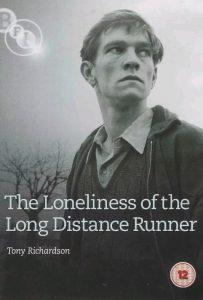
The short story was adapted into a film of the same name, directed by Tony Richardson and released in 1962. It starred Tom Courtenay as Colin Smith and Michael Redgrave as the borstal governor. The film brought Sillitoe’s exploration of working-class alienation, institutional authority and individual rebellion to the screen, becoming one of the important works of British New Wave cinema (BFI, n.d.).
10. 📖 To Sir, With Love by E. R. Braithwaite (1959)
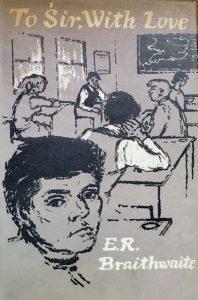
To Sir, With Love by E. R. Braithwaite is a largely autobiographical novel following Ricardo “Rick” Braithwaite, a Black former RAF pilot who encounters racial discrimination when seeking employment as an engineer. Unable to secure work in his chosen profession, he accepts a teaching position at a challenging school in London’s East End. Initially confronted by hostility and indiscipline from his pupils, Rick gradually earns their respect by treating them as young adults and encouraging responsibility, mutual respect and self-discipline. The novel explores racism, class, education, prejudice, identity and social change, highlighting the importance of education in challenging deep-rooted attitudes (Braithwaite, 1959; Literary London Society, n.d.).
🎬To Sir, With Love directed by James Clavell (1967)
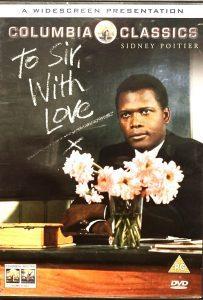
To Sir, With Love (1967), directed by James Clavell, starred Sidney Poitier as Mark Thackeray, Lulu as Barbara Pegg, Judy Geeson as Pamela Dare and Suzy Kendall as Gillian Blanchard. The film adapted Braithwaite’s novel but introduced several changes to its characters and storyline. It received a BAFTA nomination for Best British Screenplay, while its title song, performed by Lulu, became an international hit (Sony Pictures Entertainment, n.d.; Literary London Society, n.d.).
References
Primary literary sources
1. Amis, K. (1954) Lucky Jim. London: Victor Gollancz.
2. Osborne, J. (1957) Look Back in Anger. London: Faber and Faber.
3. Braine, J. (1957) Room at the Top. London: Eyre & Spottiswoode.
4. Osborne, J. (1957) The Entertainer. London: Faber and Faber.
5. Delaney, S. (1959) A Taste of Honey. London: Methuen.
6. Sillitoe, A. (1958) Saturday Night and Sunday Morning. London: W. H. Allen.
7. Bell, M.H. (1958) Whistle Down the Wind. London: T. V. Boardman.
8. Waterhouse, K. (1959) Billy Liar. London: Michael Joseph.
9. Sillitoe, A. (1959) The Loneliness of the Long-Distance Runner. London: W. H. Allen.
10. Braithwaite, E.R. (1959) To Sir, With Love. London: The Bodley Head.
Secondary literature and historical context
11. Hill, J. (1986) Sex, Class and Realism: British Cinema 1956–1963. London: British Film Institute.
Film and institutional references
12. British Film Institute (n.d.) Lucky Jim (1957). Available at: BFI film entry. Accessed 8 November 2026.
13. Royal Court Theatre (n.d.) Look Back in Anger. Available at: Royal Court Living Archive. Accessed 8 November 2026.
14. British Film Institute (2018) Look Back in Anger: Archive Review. Available at: BFI Sight and Sound.
15. Rialto Pictures (n.d.) Room at the Top. Available at: Film catalogue. Accessed 8 November 2026.
16. Miramax (n.d.) The Entertainer. Available at: Official film information. Accessed 8 November 2026.
17. British Film Institute (n.d.) A Taste of Honey (1961). Available at: BFI film entry. Accessed 8 November 2026.
18. British Film Institute (n.d.) Saturday Night and Sunday Morning (1960). Available at: BFI film entry. Accessed 8 November 2026.
19. British Film Institute (n.d.) The Loneliness of the Long Distance Runner (1962). Available at: BFI film entry. Accessed 8 November 2026.
20. British Film Institute (n.d.) Billy Liar (1963). Available at: BFI film entry. Accessed 8 November 2026.
21. Sony Pictures Entertainment (n.d.) To Sir, With Love (1967). Available at: Official film information. Accessed 8 November 2026.
22. Literary London Society (n.d.) E. R. Braithwaite: To Sir, With Love (1959). Available at: Literary London Society article. Accessed 8 November 2026.
23. British Academy of Film and Television Arts (BAFTA) (n.d.) Film Awards: Historical Winners and Nominees. Available at: BAFTA Film Awards archive. Accessed 8 November 2026.
24. Academy of Motion Picture Arts and Sciences (n.d.) The Oscars: Awards Database. Available at: Academy Awards archive. Accessed 8 November 2026.
© 2026, Jayne Thomas. All rights reserved.
Follow me :